Adani’s Big Move: Acquires FSTC to Boost India’s Pilot Training Capacity
Posted on : 1 December, 2025 7:01 pm
In a major development for India’s aviation sector, the aerospace and defence arm of Adani Group has acquired a majority stake in FSTC, one of the leading flight training providers in the country. The acquisition represents a major bet on the future of aviation, training, and capacity building in India.
What’s the Deal: Acquisition Details
- • On 27–28 November 2025, Adani Defence & Aerospace — via subsidiary Adani Defence Systems & Technologies Ltd. — ADSTL — along with Horizon Aero Solutions Ltd., closed the acquisition of a 72.8% stake in FSTC at an enterprise value of ₹820 crore.
- • This move marks Adani’s entry into the pilot training business, expanding its aviation services portfolio beyond MRO (Maintenance, Repair, and Overhaul) to training and simulation.
About FSTC — What Makes It Important
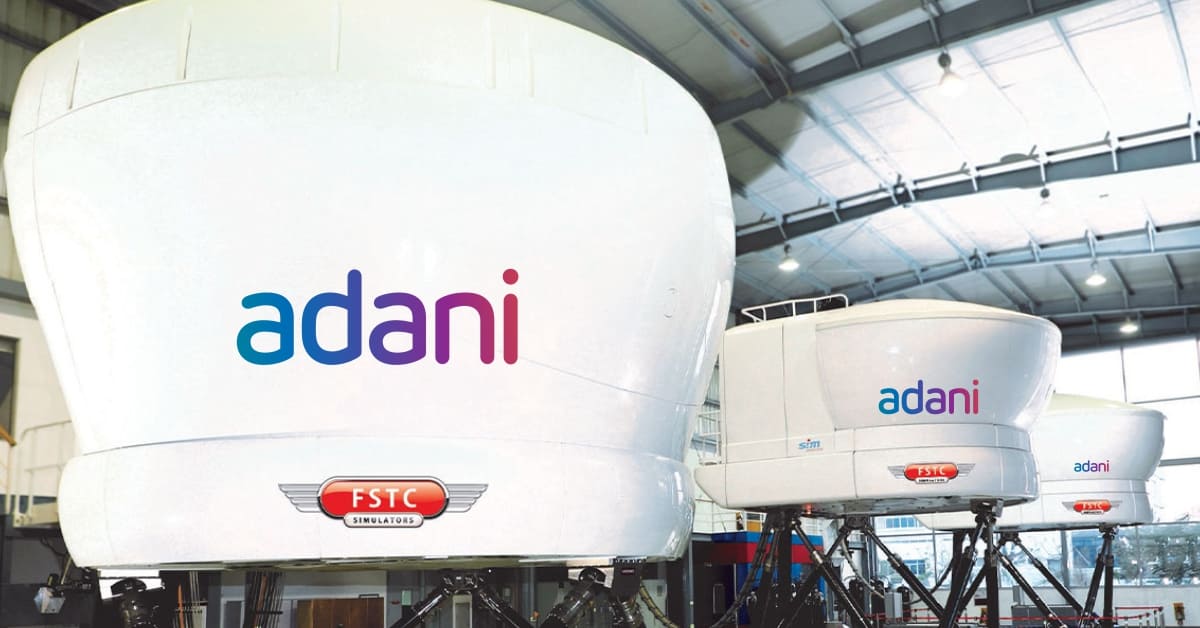
FSTC is the largest independent flight training and simulation provider in India. Some of the key features are:
- It operates 11 advanced full flight simulators and 17 training aircraft.
- It offers a full suite of pilot training services: from Commercial Pilot Licence courses right through to type ratings, recurrent training, and specialized skill courses.
FSTC operates major simulation centres in Gurugram (Haryana) and Hyderabad (Telangana).
- It also operates large flying school facilities in Bhiwani and Narnaul (Haryana).
- The institution is certified both by the national aviation regulator DGCA, or Directorate General of Civil Aviation, and by the international regulator EASA (European Union Aviation Safety Agency).
In short, FSTC already represents high-quality, certified pilot training on a large scale.
Why Adani Did This — Strategic Rationale
According to Adani Defence & Aerospace, this acquisition fits into the company’s vision of building a fully integrated aviation services platform-from MRO and general and defence aviation repair to full stack flight training and simulation.
With Indian airlines expected to induct more than 1,500 aircraft in the near future for civil expansion, cargo, and defense, the requirement for certified pilots is set to go up dramatically.
Moreover, with increasing defence requirements and greater focus on simulation-based training for safety, cost-effectiveness, and readiness, the timing coincides well with the demand from both civil and military aviation.
Therefore, this acquisition gives Adani a structurally important role in shaping the next generation of pilots and aviation workers in India.
What It Means for India’s Aviation Industry
gist Increasing Pilot Training Capacity
The infrastructure of FSTC, now supported with the resources of Adani, will improve the capacity for pilot training: more simulators and aircraft, and new training centers. This is critical given the looming shortage of pilots and the swift rate at which the fleets of Indian airlines are increasing.
Strengthening Aviation Ecosystem
Adani now offers a more comprehensive aviation services ecosystem: MRO + training + simulation. This could bring in cost efficiencies, synergy between maintenance training, and further professionalism into the sector.
Better Standards & Global Compliance
Because FSTC is certified by DGCA and EASA, it ensures that the training quality meets international norms, especially if Indian-trained pilots serve international airlines or operate around the world.
Support to Defence & Civil Aviation
The acquisition reins in both civil and defence needs. For the latter, high-quality simulators and training infrastructure are crucial for preparedness and training pilots on modern simulation equipment.
Why This Is Great News for Aviation‑Course Students & Aspirants
For students aiming for careers in aviation — be it pilot training, aviation management, aircraft maintenance, or related courses — this is a big positive development. Here’s how:
✅ More Training Seats → Easier Entry
With enhanced capacity, there will likely be more seats for training (CPL, type ratings, recurrent training). This could mean shorter waiting times and more accessible entry for aspiring pilots — a big win for students.
✅ High‑Quality Training & Certification
Training under FSTC (now backed by Adani) ensures you get DGCA + EASA‑certified training, which adds credibility to your credentials and improves employability both in India and abroad.
✅ Pipeline for Jobs & Placements
As airlines grow fleets and require more pilots, the demand for trained professionals will surge — increasing chances for good placements. Students have a higher probability of getting hired soon after training completion.
✅ Broader Career Paths
It’s not just pilots — with a full aviation‑services platform, there may be more roles for:
- Flight instructors & simulator specialists
- Aviation‑training staff & course designers
- MRO & technical support staff
- Ground‑handling, operations, and support roles
This diversification is beneficial for students across various aviation courses (AME, airport operations, aviation management, etc.).
✅ Growth of Aviation Ecosystem & Skill Demand
As the sector professionalizes, demand will rise for skilled staff familiar with modern systems, simulators, maintenance protocols, and safety procedures. For course providers and students, this creates an ecosystem where skills are in demand.
Conclusion: A Big Win for the Future of Indian Aviation
More than just a business acquisition, the FSTC acquisition by Adani is actually a structural boost to the aviation infrastructure and training ecosystem in India.
On bringing all of these aspects of training, maintenance, simulation, and services under one large resource-rich umbrella, the move has the potential to:
- Expand pilot training capacity significantly
- Improve training quality to global standards
- Meet the fast-growing pilot demand from civil & defense sectors
- Open various career avenues for students and professionals alike in aviation
- Strengthen India’s aviation ecosystem for long-term growth
This is probably the most positive news anyone studying or considering aviation courses has come across in recent years. All indications are that the future for both aviation education and employment looks brighter than ever.